01
LEHAR
Compressible CFD
Curated shock-flow cases with direct experimental comparison and high-accuracy benchmark verification.
Academic profile
Computational Thermal Sciences
I study turbulent heat transfer, gas-turbine cooling and predictive computational fluid dynamics. My work connects physical modelling, carefully designed validation and scientific computing for complex thermal-flow systems.
A research programme centred on gas-turbine thermal management, turbulence modelling and reliable simulation methods, with applications to high-speed and multiphase flows.
Solver laboratory
Each code opens a different part of computational engineering, from classical gas dynamics to reacting hypersonic flow.
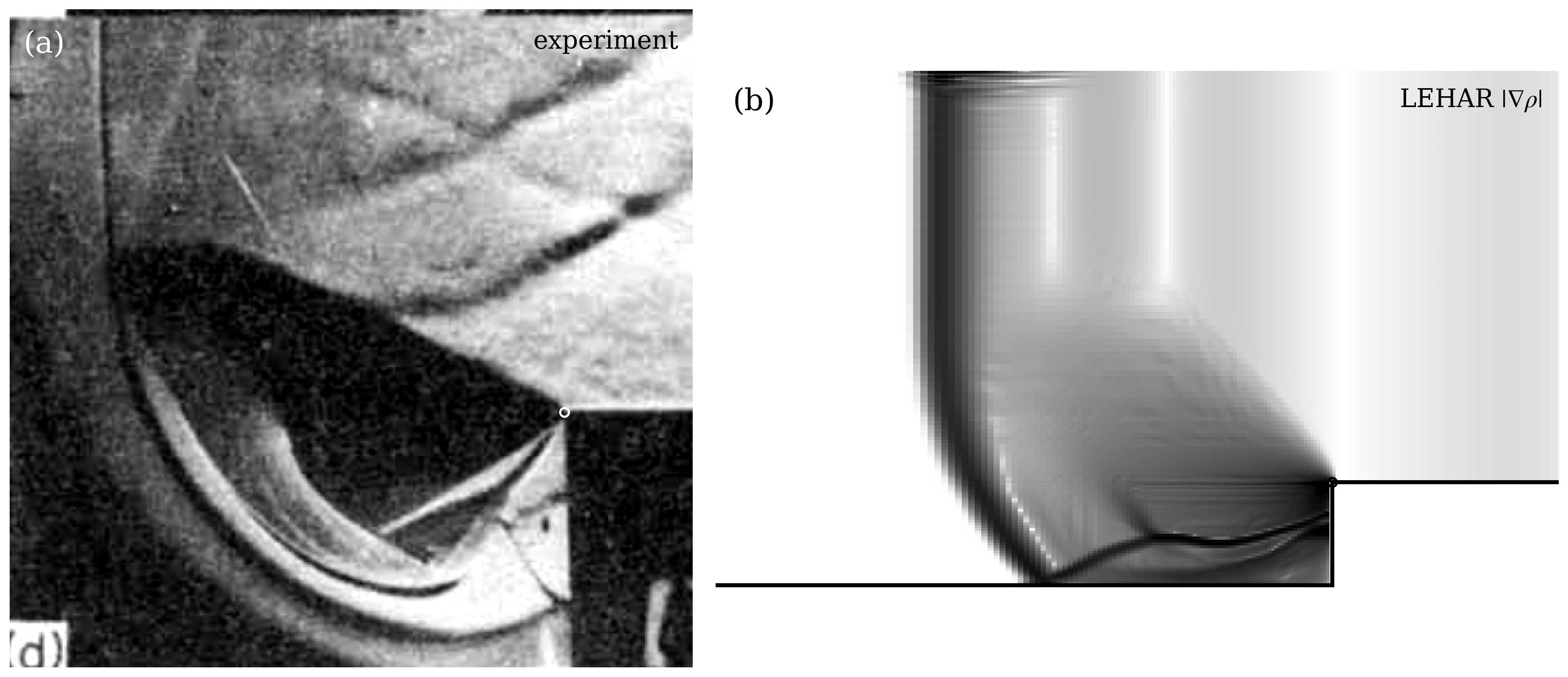
Compressible CFD
Curated shock-flow cases with direct experimental comparison and high-accuracy benchmark verification.
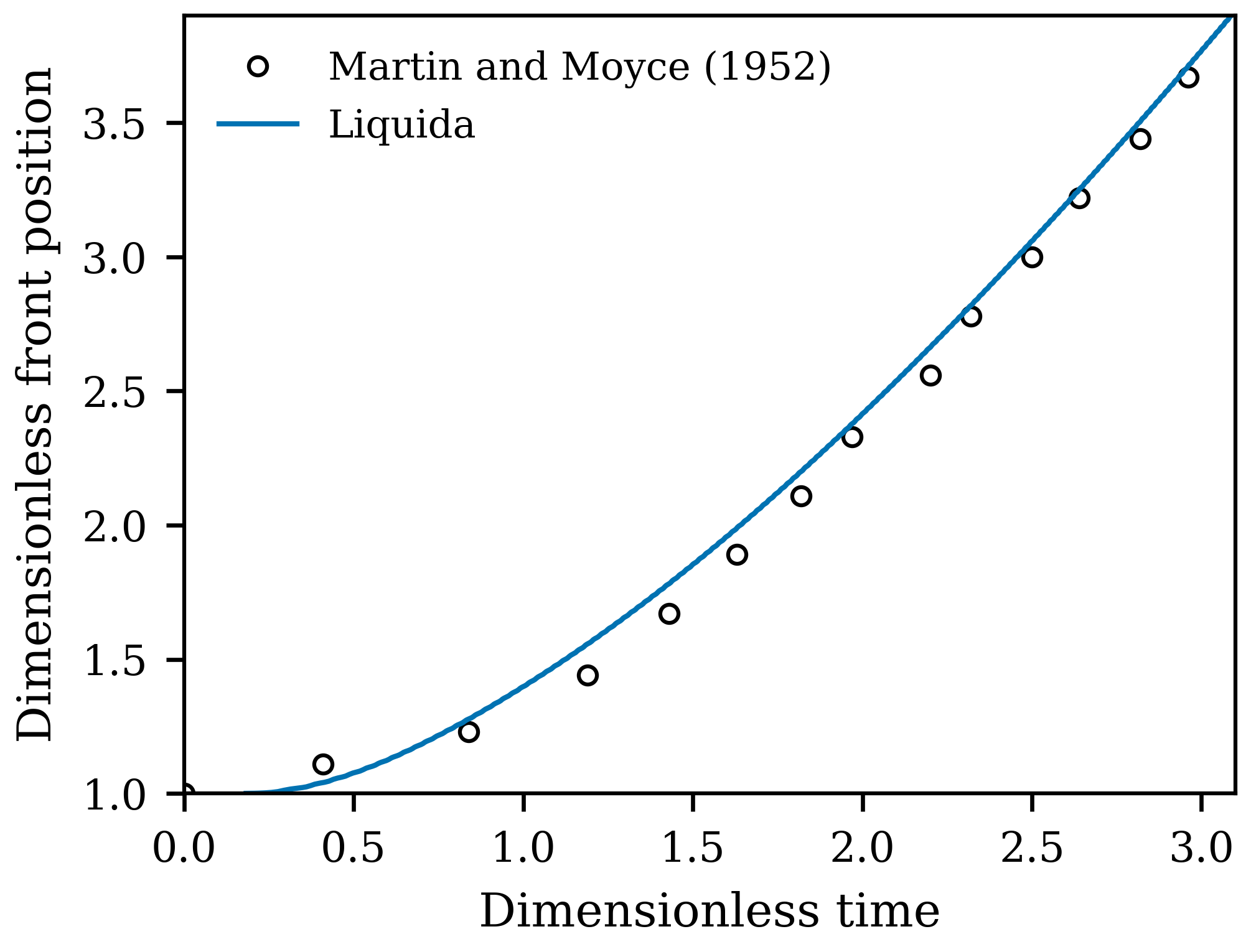
Multiphase flow
Validated liquid-column collapse with experimental front-position comparison, bounded VOF transport and converged pressure projections.
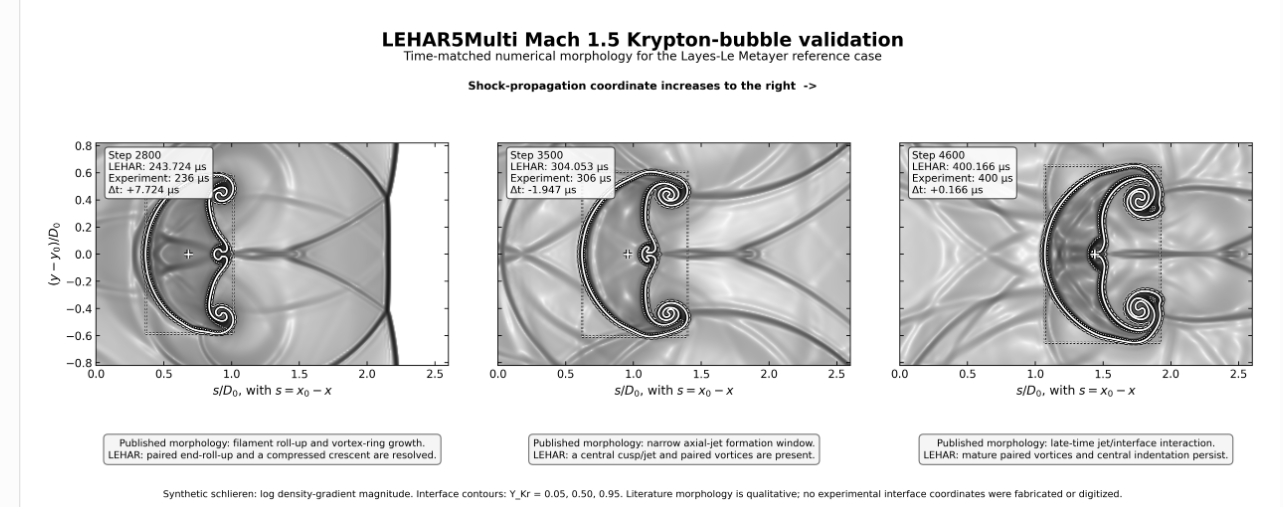
Multi-material CFD
Shock–bubble interaction, material interfaces, mixing and four-equation models.
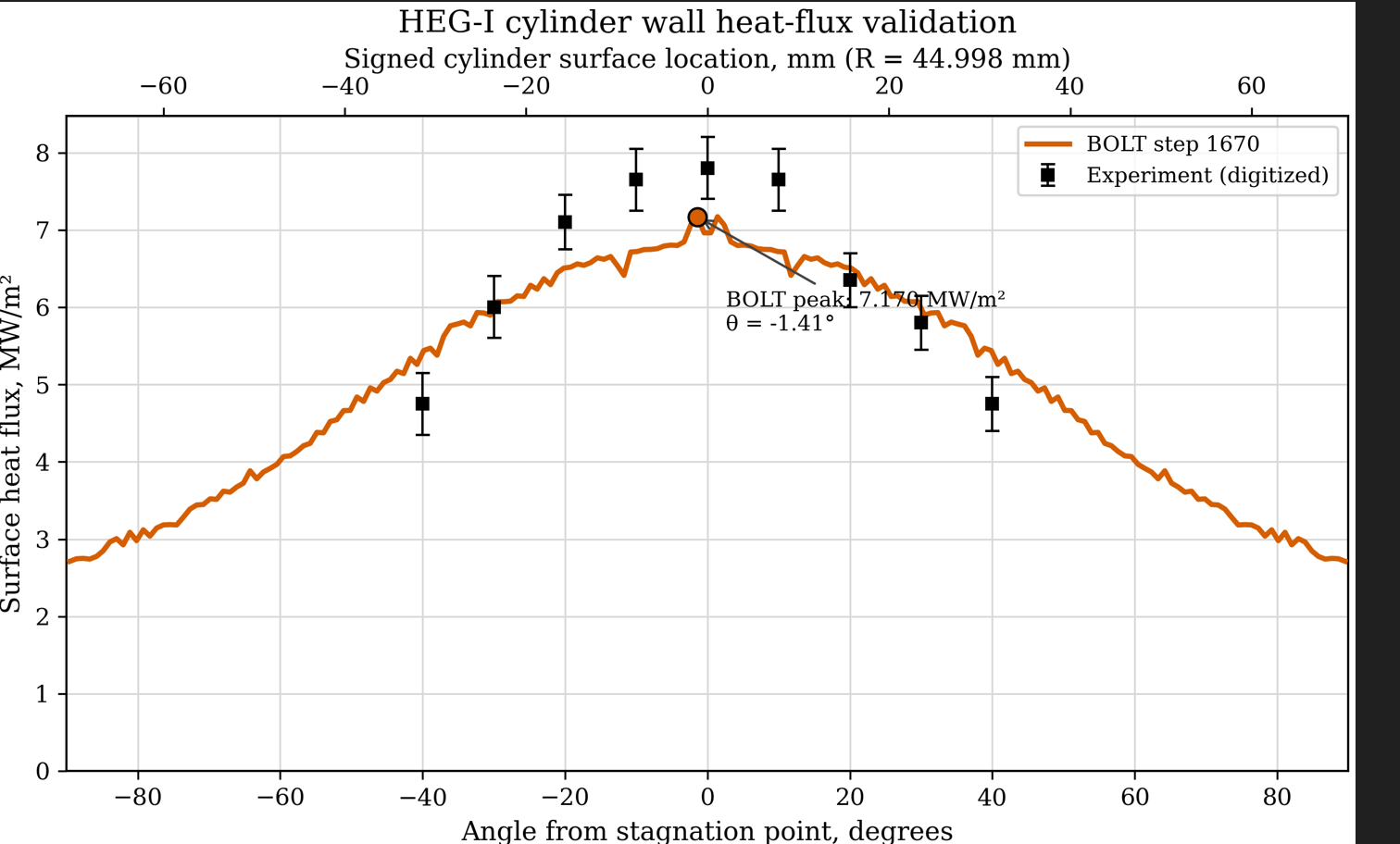
Hypersonics and chemistry
High-enthalpy flow, finite-rate chemistry, wall heating and shock-layer physics.
Start with a benchmark
Every pathway connects physical theory to setup choices, solver output and validation evidence.
Compare experimental and numerical schlieren while learning what qualitative validation can and cannot establish.
Compare the computed dimensionless front position with the 1952 experiment and inspect pressure and divergence convergence.
Follow interface deformation, vortex formation and transmitted wave structures.
Compare hypersonic wall pressure and heat flux with digitized experimental data.
Verification and validation evidence
Validated and verified LEHAR cases with experimental, analytical and benchmark comparisons.
Research vision
A focused programme connecting turbulent thermal-flow physics, validated computation and engineering design.
My research develops predictive and computationally efficient methods for thermal-flow systems. The programme grows from a foundation in turbulent heat transfer and gas-turbine cooling, supported by turbulence modelling, high-fidelity simulation, careful validation and modern scientific computing.
Impingement cooling, ribbed internal passages, scalar transport and heat-transfer enhancement using LES, RANS and experimentally anchored analysis.
Reliable closure development, verification and validation for separated, compressible and thermally coupled flows, including data-informed improvements where they add physical value.
GPU-oriented finite-volume methods and reproducible research software for high-speed, multiphase and multi-material applications. Nanofluids, hypersonics and interface flows serve as application domains rather than separate programmes.
Future programme
I aim to build a student-engaged programme linking gas-turbine thermal management, validated turbulence modelling and accelerator computing. Natural collaboration and funding directions include thermal transport, energy systems, aerothermodynamics, high-performance computing and industry-supported cooling research. These directions align with programmes commonly supported by NSF, the US Department of Energy, NASA and industrial partners.
Sponsored research
Competitive external support and institutional awards for turbulent heat transfer, applied fluid engineering and computational thermal systems.
Higher Education Commission, Pakistan · Approximately Rs. 5 million / US$54,000
Research Initiation Grant · B$6,000 · 18-month project
Internal research grant · B$8,000
Internal research grant · B$8,000
Royal Brunei Technical Services · B$10,000
Special research grant · B$4,000
Academic record
Selected publications organized separately from the technical learning articles and validation case studies.
Naseem Uddin, Priscilla Tang Wei Kee and Bernhard Weigand
DOI: 10.1016/j.applthermaleng.2024.124258Naseem Uddin and co-authors
Naseem Uddin and co-authors
Naseem Uddin and co-authors
DOI: 10.1016/j.ijheatmasstransfer.2020.120705Naseem Uddin and co-authors
DOI: 10.1002/htj.21986Naseem Uddin and co-authors
DOI: 10.1615/JEnhHeatTransf.2020033413Naseem Uddin and co-authors
DOI: 10.1080/10407782.2019.1647712Naseem Uddin and co-authors
DOI: 10.1016/j.icheatmasstransfer.2018.12.002Naseem Uddin and co-authors
DOI: 10.1080/10407782.2018.1538293Naseem Uddin and co-authors
DOI: 10.1080/10407782.2015.1090840Naseem Uddin and co-authors
DOI: 10.1080/10407782.2013.757155Naseem Uddin and co-authors
DOI: 10.1016/j.ijheatmasstransfer.2012.10.052Naseem Uddin and co-authors
DOI: 10.1177/1740349912456786Naseem Uddin and co-authors
DOI: 10.2514/1.T3916Naseem Uddin and co-authors
Conference paper
DOI: 10.1049/cp.2018.1516Paper HT2008-56422, Jacksonville, Florida
Search on ResearchGateConference paper, Berlin
Google Scholar recordConference paper
Google Scholar recordBook
Publisher recordBook
Publisher recordBook
Publisher recordBook
Publisher recordDoctoral thesis in Aerospace Engineering
University repositoryNo public records are listed in this category yet.
Books and learning resources
Books from the original Thermal-Engineering.Net collection, covering the core subjects that support the simulation cases on this site.
A dual treatment of finite-difference and finite-volume methods, including iterative solvers, practical stabilization, verification using the Grid Convergence Index and LES grid-independence assessment.
“A comprehensive and modern textbook on Computational Fluid Dynamics.” Wu Tao, Northwestern Polytechnical UniversityView at CRC Press / Routledge →

A structured route from fluid properties and conservation laws to internal, external and compressible-flow problem solving.
“The book reads easily… Highly recommended.” Mohammad-Reza Alam, University of California, BerkeleyView at CRC Press / Routledge →

A progressive treatment of conduction, convection and radiation with emphasis on engineering reasoning and worked applications.
View at CRC Press / Routledge →
Fundamental thermodynamic principles developed through practical engineering systems and applications.
“The didactics of the book are excellent.” Philipp Epple, Coburg UniversityView at CRC Press / Routledge →
Research on the modelling and large-eddy simulation of complex turbulent flows, including impinging jets and separated internal flows.
View in the Universität Stuttgart repository →Graduate supervision
Current doctoral work develops independence in physical modelling, numerical methods, validation, scholarly writing and reproducible computation. Topics are summarized without identifying students.
RANS and LES studies of passive nozzle inserts across practical Reynolds numbers, with emphasis on scalar-flux anisotropy, experimental validation and improved subgrid-scale closure.
Multi-fidelity correction of Reynolds-stress predictions for separated heat transfer, using DNS-informed learning and deployment in engineering RANS calculations for ribbed ducts.
Optimization of twisted-tape heat exchangers with Diamond, Gyroid and Primitive structures across water, oil and nanofluid operating conditions, including performance correlations.
Teaching
Broad preparation for mechanical and aerospace engineering curricula, supported by evidence of teaching quality.
I teach thermodynamics, fluid mechanics, heat transfer and CFD by connecting governing equations with worked analysis, numerical simulation, verification and engineering interpretation. My approach emphasizes outcome-based course design, transparent assessment, reproducible computation and progressive student independence.
Teaching portfolio
Teaching quality
2020: Excellent qualitative evaluation. Numeric results from the other review years range from 82.0% to 90.6%.
Curricular fit
Teaching coverage includes undergraduate and graduate thermodynamics, fluid mechanics, heat transfer, computational fluid dynamics, applied fluid dynamics, turbulence and energy systems. Research cases are used selectively to connect governing equations, computation, verification and engineering judgement.

Professor profile
Senior Assistant Professor · Universiti Teknologi Brunei · CEng MIMechE · MIEAust CPEng NER
Dr.-Ing. Naseem Uddin is a mechanical-engineering academic and computational-fluid-dynamics researcher. He earned his Dr.-Ing. in Aerospace Engineering from the Institute of Aerospace Thermodynamics at Universität Stuttgart, Germany, with the distinction “Sehr Gut” (excellent), supported by HEC and DAAD fellowships. His doctoral research centred on gas-turbine cooling technologies, particularly turbulent impingement cooling, ribbed internal passages and scalar-transport modelling. His thesis, Turbulence Modeling of Complex Flows in CFD, combined turbulence modelling and large-eddy simulation for complex thermal-flow systems.
Before joining Universiti Teknologi Brunei, he served as Professor of Mechanical Engineering at NED University of Engineering and Technology. His current work spans turbulence modelling, compressible and hypersonic CFD, heat transfer, multiphase flow and GPU-accelerated scientific computing. He develops the LEHAR, LIQUIDA, LEHAR Multi and BOLT research codes and uses their verification and validation cases to connect active research with university teaching.
View LinkedIn profile View the original full profile